


What is the cajón, who is it recommended for, and how do you play it? And why has it become so popular in almost every style and genre of music around the world? Get to know this simple yet remarkably rich-sounding drum in depth!
The cajón is a simple yet highly versatile percussion instrument of Afro-Peruvian origin.
In Spanish, cajón means “box,” which refers to both its shape and its origins. Resembling a crate or wooden box, it is made of wood and played while sitting on it. It is an essential instrument in flamenco as well as in Afro-Cuban and Peruvian music.
The cajón can be played with the hands, with wire brushes, or even with a traditional bass drum pedal.
Its sound is remarkably diverse and can even replace a full drum kit in certain settings. Its tonal range extends from deep bass sounds to sharp, snare-like highs, depending entirely on where it is struck.
The cajón became popular starting in the mid-19th century.
It was invented by enslaved Africans who had been taken to the Americas to work on sugar plantations. Since they were not allowed to play their traditional drums, they began drumming on shipping crates. Over time, they crafted cajóns disguised as boxes or stools, making the instrument difficult to identify and restrict.
The cajón was introduced to Europe and the wider world by the legendary Spanish flamenco guitarist Paco de Lucía, who encountered it while touring Peru with his band in the 1970s. Since then, the cajón has become an essential part of flamenco, Cuban, and Peruvian music, and it is now widely used across many genres, including Latin, pop, jazz, and acoustic performances.
There are three main types of cajón, though several additional subtypes also exist:
The original Peruvian cajón is extremely simple in construction. It contains no internal additions such as snares or strings. As a result, its sound is clean and natural, characterized by deep, earthy bass tones and crisp high-end slaps.
It is perfect for traditional folk music, acoustic settings, authentic soundscapes, and jam sessions.
Although it has not become widespread in Europe, when played with proper technique it can create a truly exciting and distinctive sound world.
The flamenco cajón originates from Spain. Guitar strings are installed inside the instrument, giving it a sharper, more percussive, snare-like sound. This makes it ideal for rhythmically driven flamenco music.
Playing the flamenco cajón requires a higher level of technical skill.
Around 80% of professional musicians use a string-equipped flamenco cajón.
On certain models, the tension of the internal strings can be adjusted, allowing the player to shape the sound according to their personal preference. It is even possible to set up a highly sensitive, overtone-rich snare response. In this case, the strings will also influence the bass tones, but this is not necessarily a drawback.
A string cajón offers more tonal customization options, though it does require a bit more attention and fine-tuning. However, once properly adjusted, its sound remains stable
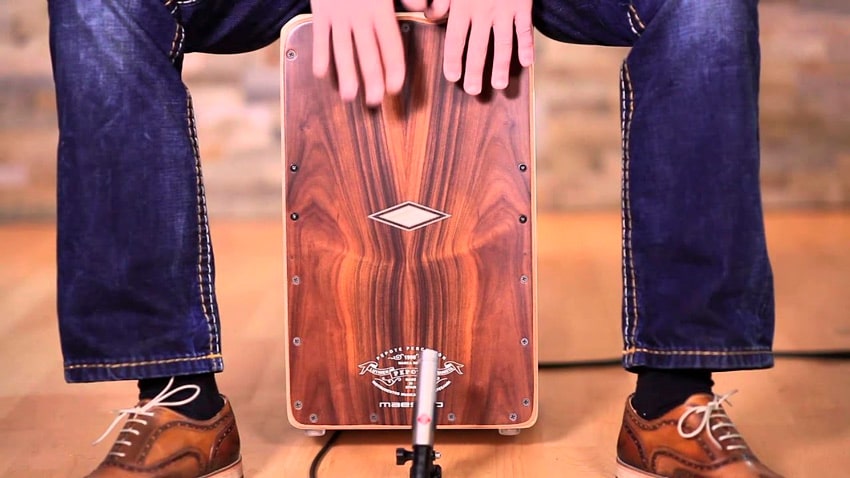
The snare cajón features a traditional design but comes with removable snare wires. This allows the musician to use it for both traditional and modern styles, such as blues, rock, and pop. Thanks to its versatility, it works well across a wide range of musical genres.
The tones are clearly defined and well separated, with clean, deep bass notes and a slightly sizzly character. The snare sound is somewhat looser and grainier.
Additional cajón types:
Cuban cajóns are smaller in size and do not contain internal strings. They are used primarily in Afro-Cuban music, as their sound is rich in overtones and allows for both higher-pitched tones and deep bass sounds.
It is smaller in size and features two playing surfaces with different tones. It is well suited for playing complex rhythms, making it a great fit for jazz and acoustic music. It is also lightweight and easy to transport.
6. Travel cajón – compact and affordable
Smaller in size and more budget-friendly, the travel cajón still offers a versatile sound, making it an ideal choice for musicians on the go. Due to its compact dimensions, it does not produce deep bass tones.
7. Electronic cajón
A blend of traditional design and modern technology. It comes equipped with pickups and amplification options, allowing the sound to be shaped and enhanced. Some models even feature built-in loops, making it perfect for creative experimentation.
If you’re looking for a truly distinctive cajón with an elegant design and an exceptionally rich tonal range, the limited edition MAG Cajon is worth discovering.
Most members of our team are musicians, which is why we build only instruments that we ourselves would be happy to play.
The MAG Cajon was created in this spirit, with the goal of delivering both outstanding sound quality and inspiring playability.

Modern cajón drums offer a wide range of possibilities, with removable and adjustable strings or snare wires. This makes a single cajón incredibly versatile. It can produce traditional cajón tones just as easily as it can handle modern musical styles.
It is an intuitive instrument that does not require prior musical training. You can even learn to play using online resources and tutorials.
It adds a unique sonic character to virtually any piece of music. Even a simple melody can be enhanced, colored, and enriched by its rhythmic texture.
Expressive and intuitive, the cajón invites experimentation with a wide range of styles. Its sound can also be customized to suit your needs by adding a microphone, snare wires, or strings.
It can also be used in a wide range of weather conditions.
It is also remarkably durable and long-lasting.
It enhances creativity and musicality while helping to relieve stress.
If you’re not aiming to play at a professional level and simply want an enjoyable hobby, the cajón is an ideal choice. Even with minimal effort, playing can become a rewarding and relaxing activity. You can pick it up anytime at home, release tension, and instantly lift your mood.
As an added bonus, it provides light physical activity—at least for your upper body—releasing feel-good hormones along with the music.

Parts of the cajón:
The cajón is played while sitting on the instrument, using both hands alternately.
You can play with your palms, fingers, and even your fists to create different tones and textures.
Lean your upper body slightly forward, keeping muscle tension minimal and your weight centered.
You can sit with all four corners of the cajón firmly on the floor for stability, or tilt it slightly backward to make the playing surface easier to reach.
Striking areas:
The exact geometric center is usually not struck, as it is difficult to reach comfortably while playing.

Playing techniques
1) Palm strikes
Strike the upper third of the front panel in the center, alternating between your right and left hand.
You can produce two different sounds depending on your technique:
2) Finger technique
Strike the upper edge, especially near the corners, for a sharper tone.
Using only your fingertips, you can create crisp, snare-like, fast rhythms by playing along the rim of the cajón.
3) Fist technique
With your hands clenched into fists, you can tap on the top surface and the upper edge of the cajón to produce deeper, more percussive tones.
4) Borrowing techniques from other instruments
You can also apply playing techniques from other percussion instruments. For example, the cajón can be played in a conga style—though this requires more advanced skill and control.

Mario Cortes
A Spanish cajón player known for his flamenco style and exceptional speed. He is able to perform using both his hands and feet.
Nina Rodriguez
A Canadian percussionist with an energetic and dynamic style. She has performed with artists such as Beyoncé and Ricky Martin.
Rafael Padilla
A Cuban percussionist who blends traditional Cuban rhythms with modern musical styles.
Israel “Toto” Berriel
A Puerto Rican percussionist and multi-instrumentalist. He has played with Celia Cruz, Marc Anthony, and Gloria Estefan.
Heidi Jouber
A French cajón player known for her flamenco and Latin jazz style. She has performed with the Buena Vista Social Club and Antonio Rey.
To make sure we’re displaying the right prices for our instruments, please confirm your location.
