


How to benefit the community through music, and what role can you play as a musician? Music creates connections among people in any community, regardless of age, financial, or social status. In this article, we provide 9 ideas on how you can contribute to the life of your community through music!
The role of music has always been significant in the lives of our communities. Even artifacts from the Paleolithic era support the presence of music, suggesting that music played a role in early communities.
Music is indeed a universal language understood by everyone.
However, in the lives of the first human groups, it did not exist as an independent, artistic activity as it does today. It was closely linked to the cultural rituals of the community.
Before the advent of spoken language, music may have played a role in communication and could have already served as a bond within communities. Moreover, music might have contributed to survival.
Anthropologists have proven that while communities with musical culture thrived, those without it struggled for survival.
This is because sounds have a significant impact on our emotions.
Music strengthens emotions and awareness, encouraging people to empathize with the feelings of others and support them.
Sound effects alleviate the fear of loneliness and annihilation. Therefore, music enhances early community development and supports the well-being of fetuses and young children.
For a long time in human history, music also played a practical role.
Even in the 16th to 18th centuries, folk music was practically “used” by rural people. They sang about notable events, festivals, and personal stories of village life, and they sang while working. Music connects important community events like notable days, weddings, and funerals.
In many other cultures, music had, and still has, ritual, religious, and sacred significance; it accompanied and continues to accompany rituals and ceremonies.
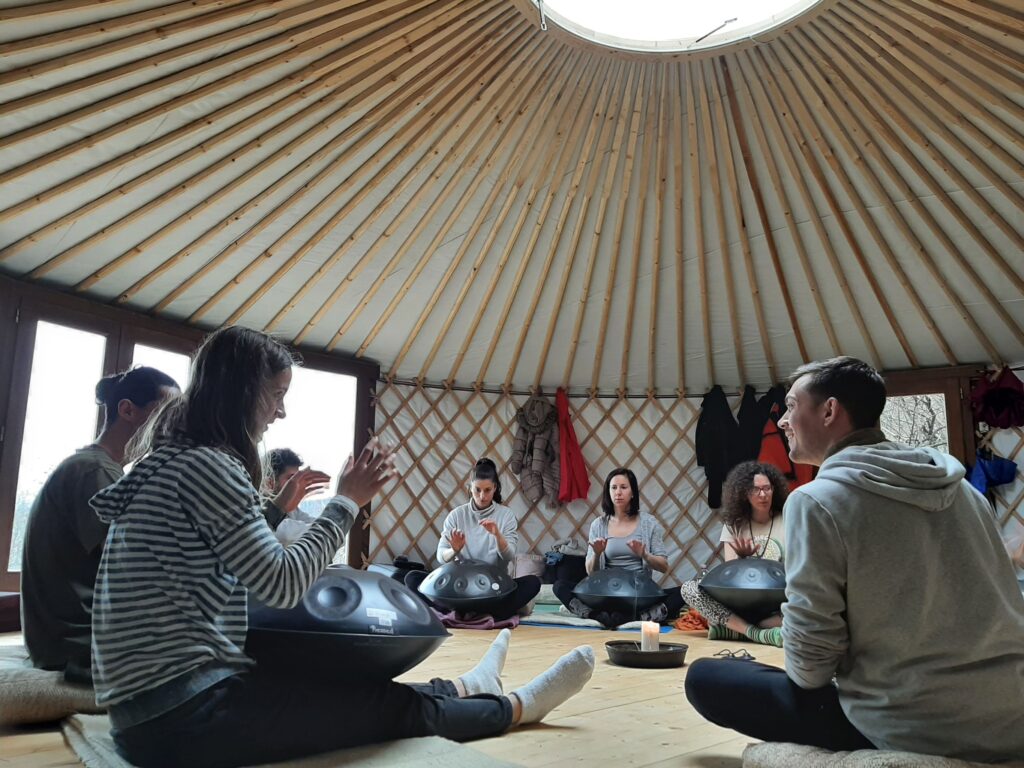
There are several theories about the origin of music.
In early times, the human voice could have been the first form of melody.
The perception of sound effects has been with us from the beginning. Even a fetus can perceive the mother’s heartbeat, bowel movements, blood flow, and the external world’s noises.
During childcare, mothers communicate with their babies not with words but with sounds.
“Motherese” aids in language learning for children and has musicality.
That’s why playing music, listening to music, or singing evokes a strong, pleasant feeling in our subconscious because it reminds us of connecting with others.
Some theories suggest that music originated from the sounds of nature or the imitation of sounds accompanying human actions. It’s likely that objects and tools used by humans inspired the creation of the first musical instruments. These simple instruments, such as rattles, percussion, drums, and whistles, are still in use today.
A good example of this is the Cegléd jug or the Indian ghatam, which were originally everyday objects used practically.
Music helps manage negative emotions, assisting in processing overwhelming feelings such as anger, grief, and relieving anxiety and stress.
A 2001 study highlighted that better mental and emotional health improves societal integration. This is because someone who feels good, has self-confidence, and maintains a positive attitude can become a more integrated part of society, ultimately strengthening the entire community.
Music helps on two levels:
Live music nurtures, heals, and revives the soul, as people collectively experience its soothing effect. Deep and lifelong friendships can be formed through music, showcasing its powerful community-building strength.
Playing music, or engaging with an instrument, relieves stress and anxiety and promotes relaxation.
Joint music-making, according to research, induces strong positive changes in the brain.
Hungarian neuroscientist József Hámori clearly showed that music shapes our brain, thus impacting our communication abilities: “Musicality (and its development from a young age) forms an integral part of the fully developed human personality.”
Through joint music activities, young students learn valuable skills, including but not limited to:
Young people experience the satisfaction of overcoming challenges together, driven by their internal motivation and determination. This satisfaction carries into adulthood, which they significantly benefit from later in life.
In one study involving individuals aged 60-83, those who had played music for at least 10 years in their youth scored significantly better on cognitive ability tests than those who hadn’t played music.
Positive outcomes of community music-making and music education:
Music holds numerous possibilities for enhancing local community life, which can be achieved even by individual musicians or bands.
Music and music-making can help:
Before you start building a community, first define your mission, vision, and values.
Why are you here? What do you want to achieve?
Your values will be communicated to the community, who will sense and resonate with them.
Host music lessons for children or adults, which create excellent opportunities for connection and can lead to friendships.
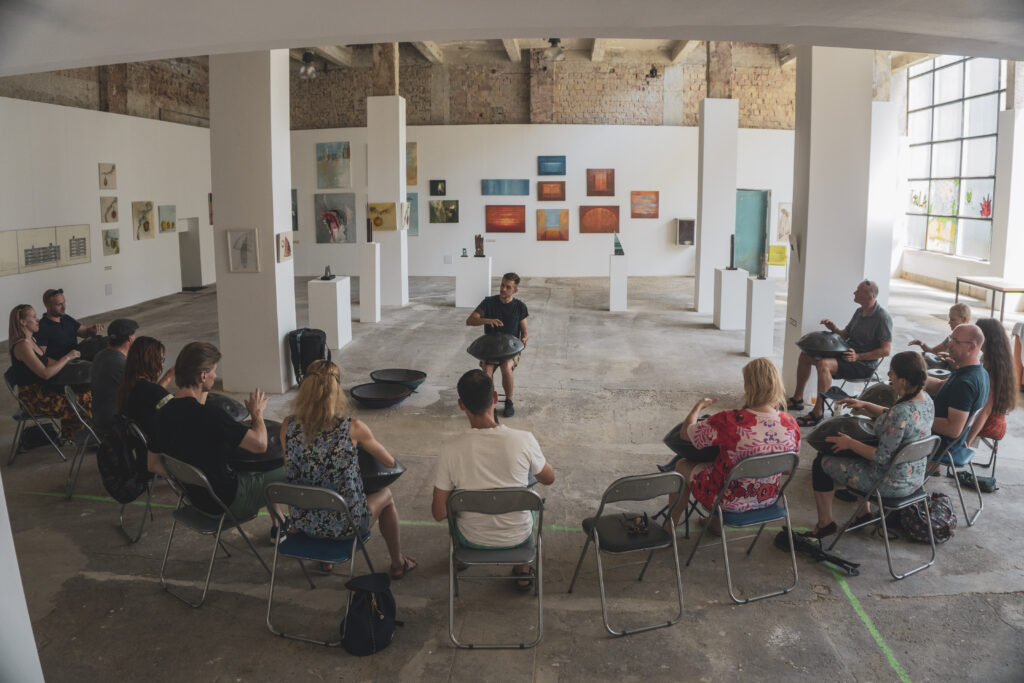
Teach music to children whose parents cannot afford it. This helps develop their cognitive abilities and also contributes to improving their mental health.
Provide musicians of various skill levels the opportunity to perform at “open mic nights.” These can range from small to larger-scale concerts. A well-planned outdoor music event offers an enjoyable and memorable experience for the entire community, bringing together people from young children to the elderly.
Playing instruments, whether through interactive play or community music-making, brings people together and captivates them. It provides a memorable experience, especially for those who have never held an instrument before.
Playing instruments and sharing experiences and joys deepen the connections among community members.
This can even inspire people to learn to play music themselves.
Organize collaborative songwriting sessions and performances (ensembles) with other musicians, and involve the local audience as well!
Such events build and strengthen the community by supporting emotional well-being.
Music therapy is effective for stress relief and can even have pain-relieving effects.
Healing circles are community events or practices aimed at promoting physical, mental, and emotional healing. Music plays a particularly important role here, aiding participants in relaxation, emotional processing, and enhancing the sense of community belonging.
Healing frequencies, like 432 Hz music, are used to promote harmony and inner peace. This is the frequency at which the handpan is often played.
The handpan is frequently used in sound baths and music therapy because of its meditative, relaxing, and captivating sound. Whether you are listening or playing, it guarantees an uplifting experience.
Moreover, the handpan is an intuitive instrument that anyone can easily learn, and you can enjoy success with it even after just a few hours of practice.
Volunteer with organizations that use music to help others, such as in healthcare facilities, nursing homes, or orphanages.
Music has incredible power, and if you dedicate your time to occasionally bringing joy to people in difficult situations, you will receive far more in return than you give. The gratitude and joy your music brings to people are worth more than any money or award.
Create your own website and social media pages, and produce free music educational content. This way, you make your valuable knowledge and experience accessible to many people. Plus, you promote the art of music itself!
You can take on a bigger challenge if you’re dedicated enough. This allows you to create long-term impact and change many people’s lives.
The good news is that you can gather like-minded individuals around you, and together, you can achieve a lot.
Did you know that such an initiative, with the help of Playing for Change, led to the establishment of the first music school in a South African town?
Playing for Change started as a band and expanded into a global project on YouTube. Musicians from all over the world, representing diverse cultures—from the United States to Brazil and South Africa—joined the initiative. Even global stars, like Manu Chao, have performed with them.
The music project has expanded beyond the online space, leading musicians to establish a Foundation aimed at connecting people through music and bringing positive changes to their lives. .
Why not start something small as a musician yourself? If you positively impact even a single person’s life, it’s worth it! Start tomorrow!
To make sure we’re displaying the right prices for our instruments, please confirm your location.
