


Which is the best handpan material? Nitrided steel vs stainless steel? Or perhaps ember steel? Before you choose the handpan that’s right for you, it’s important to familiarize yourself with the properties of the materials.
This is because the material greatly influences the instrument’s sound, quality, and durability.
Let’s take a look at the materials and what each is best suited for!
Handpans are made from steel and its alloys.
These can include:
The choice of material influences the difficulty and cost of production and, naturally, affects the instrument’s sound.
Material selection impacts the following:
Want to understand how the shell itself is constructed before choosing a material? Read: Handpan shell: materials and manufacturing
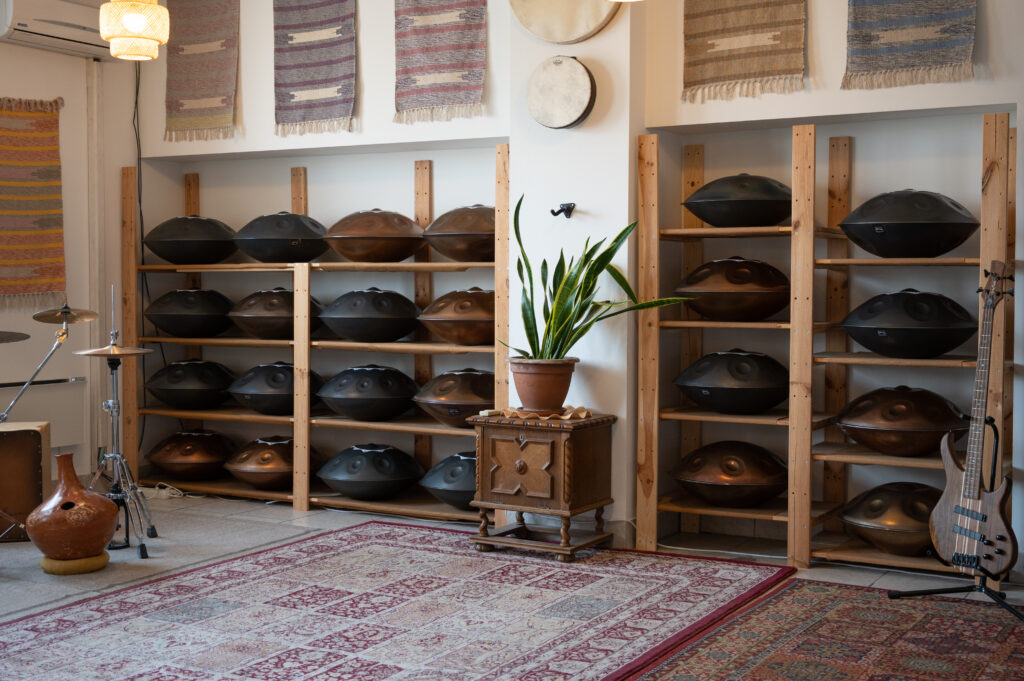
Which is the better/best handpan material? Nitrided steel vs. stainless steel handpan? or perhaps ember steel? Each material has its own advantages.
In truth, however, there is no single “best” handpan material. It really depends on your needs and preferences as to which will be right for you.
If you plan to play outdoors frequently, nitrided steel is a good choice.
Stainless steel is ideal if you want to explore various genres. Its sound is extremely versatile, making it easy to adapt to any type of music. It’s even great for stage performances and studio recordings.
Ember steel produces a warm and harmonious sound, making it a good choice for those who prefer melodic music and soul-touching, meditative tunes.
The descriptions below generally apply to the basic materials, but individual models may vary from these based on the manufacturer and may have unique qualities.
Ember steel is the newest handpan material, developed in 2020.
It is a type of stainless steel, which means it is an alloy of different types of steel. However, its chemical composition and mechanical properties differ from that of stainless steel handpans.
The alloy that gives it its beautiful color and name provides it with an exceptionally distinctive sound, even among handpans:
Sound of an ember steel handpan:
Ideal for meditation and both slightly faster and slower playing as it is well controllable.
However, due to its long sustain, it is not ideal for percussive, dynamic playing.
Beginners quickly fall in love with it because it allows for soul-soothing melodies even with inexperienced fingers.
It is resistant to rust, meaning it requires less frequent maintenance. It rarely goes out of tune, so tuning adjustments are needed less often. Every MAG instrument is built from Ember Steel and comes with a Lifetime Retuning Warranty — if it ever goes out of tune, we retune it free of charge, for life.
From the musician’s perspective, we found no drawbacks with the ember steel handpan, though we makers need to put in a bit more work. 🙂
For a deeper look at what tuning stability means in practice and what affects it over time: Tuning stability in a handpan.
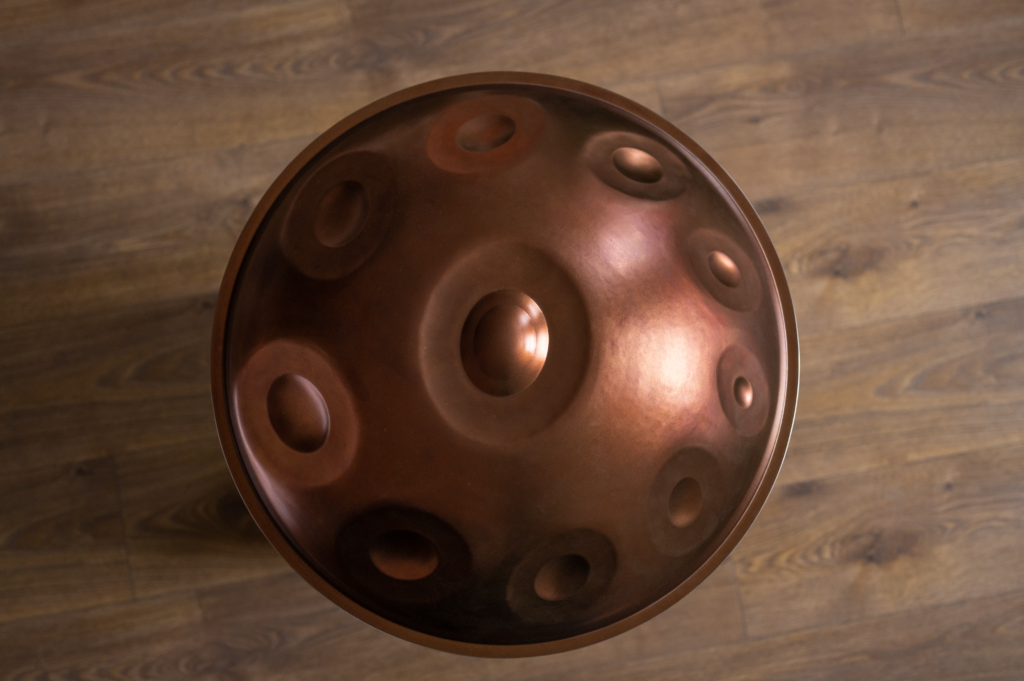
Hand-tuned in our workshop in Győr, with a Lifetime Retuning Warranty included as standard.
Nitriding is a surface treatment process that introduces nitrogen onto the surface of the steel, resulting in an extremely hard and wear-resistant outer layer.
The first handpan, the Hang® created by PANart in 2001, was made from nitrided steel. Consequently, the majority of early handpans used nitrided steel as their base material.
A nitrided steel handpan is an excellent choice for both beginners and musicians due to its exceptional durability. It resists scratching and weathering, making it suitable for frequent transport and outdoor use.
Each tone-field on a nitrided steel handpan resonates individually and distinctly, making it ideal for fast, percussive-style music.
However, with a gentler touch, you can also draw out soft and melodic tones.
While nitrided steel handpans are not as rust-resistant, with proper care you don’t need to worry about rust.
It’s important to note that regardless of the material, all handpans require regular care and maintenance. Read our full guide: Handpan care
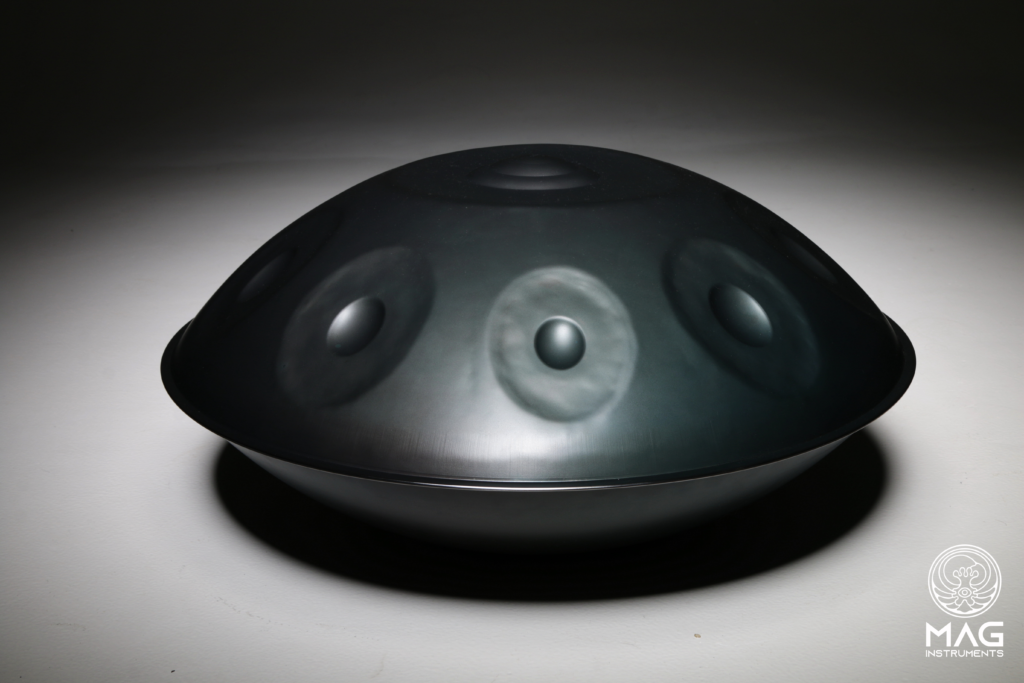
The ember steel handpan is a variation of the stainless steel handpan, so the following summary applies to both types.
For their differences, you can read a dedicated section further down.
The stainless steel handpan is popular due to its long resonance (sustain) and refined sound.
It’s easy to play, as it responds beautifully even to the slightest, less precise, and less skilled touch.
Stainless steel handpans are weather-resistant. They are completely rust-proof, but they are sensitive to salts (like sweat) and acids, which can cause discoloration with prolonged exposure. While this doesn’t affect the sound, it may not be visually appealing.
They are ideal for playing on stage, in the studio, and outdoors.
However, it’s important to note that some models may lack complete balance in sound sustain and resonance, potentially leading to over-control. This is especially true for fast and intense playing. That’s why it’s recommended to buy from a specialized store where you can try the handpan before purchasing and ask the seller questions.
On the MAG Instruments website, you can ask questions about the handpans anytime via email, phone or in person at our Budapest store.

Nitrided steel vs stainless steel handpan – which is the better choice?
If you’re uncertain, we’ve briefly summarized the main characteristics of nitrided steel vs. stainless steel in the table below.
| Nitrided steel | Stainless steel handpan |
| sharp, powerful, clear tonesindividual sound fieldsbest for percussive, intense, fast playingcan produce melodic music with delicate techniqueless rust-resistant, so avoid playing at the seasidehowever, with proper care, it will not rustits powerful sound can carry the handpan music for kilometers in outdoor settings | long sustain, lasting tonesovertones often resonate togetherextremely rich soundclear, dreamlike, gentle, and tender tonesideal for slower, meditative, melodic playingexcellent for sound therapycompletely rust-proof, allowing use in humid, damp environmentsrequires regular maintenance |
| if well-tuned, it may not need retuning for years | sensitive to heat, so avoid playing in direct sunlight as it may detune (generally resets after cooling, but prolonged heat exposure can detune the handpan permanently)ideal for playing in smaller spaces, quiet rooms, as its sound is not as intense as nitrided steel |
The sharpest difference between nitrided steel and stainless steel handpans is where you plan to play. If outdoors, the nitrided steel is clearly the best choice because its powerful sound carries far. If you prefer to play at home or indoors, stainless steel will be the better option for you.
Curious about how the material connects to the scale you choose? Read: 10 handpan scales — which one is right for you?
Take a look at the MAG handpan selection where you can explore our instruments with sound samples and videos. For more handpan knowledge, go down the MAG Rabbit Hole.
Not sure which instrument to start with? Here are some of the most popular configurations:
A fully diatonic D natural minor scale. Warm, versatile, and forgiving — the most recommended first handpan. Read the full D Kurd scale guide
A hexatonic minor scale with a flowing, folk-influenced character. Approachable for beginners, musically rich for experienced players.
One of MAG’s most popular Mutant configurations. A pentatonic Dorian scale ideal for meditation and groove-based playing. Read the full Pygmy scale guide
A deep-register instrument built for atmospheric, immersive playing. The Nordlys (“Northern Lights”) sits in an unusually low register that showcases Ember Steel’s long sustain at its best.
Browse the full MAG range — from beginner-friendly D Kurd configurations to extended Mutant builds.
Also worth reading: What makes a good beginner handpan? · What makes a premium handpan? · Handpan care
To make sure we’re displaying the right prices for our instruments, please confirm your location.
